
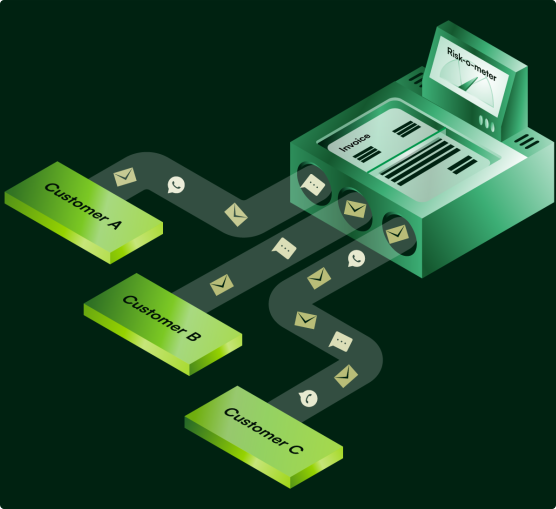


Trusted by Enterprise Finance Teams Worldwide










Supercharge Your Collections
With FinFloh
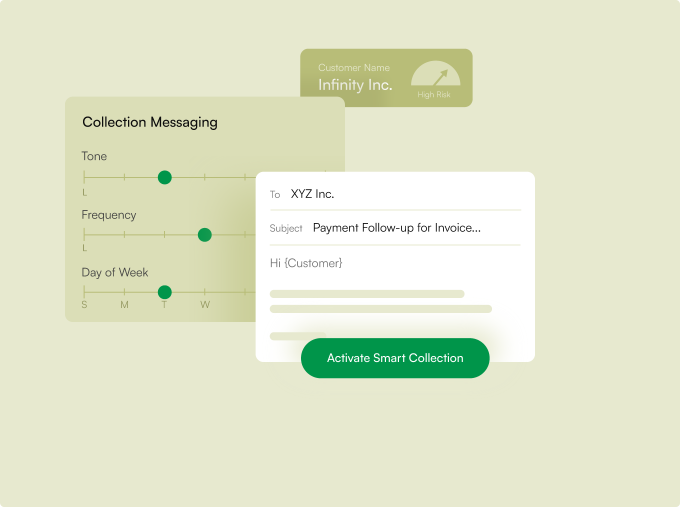
Dynamic Dunning Reminders & Internal Alerts
Trigger automated reminders and internal alerts based on customer category, aging delays, and payment patterns. Configure multiple collection templates with dynamic messaging, frequency and escalation workflows.
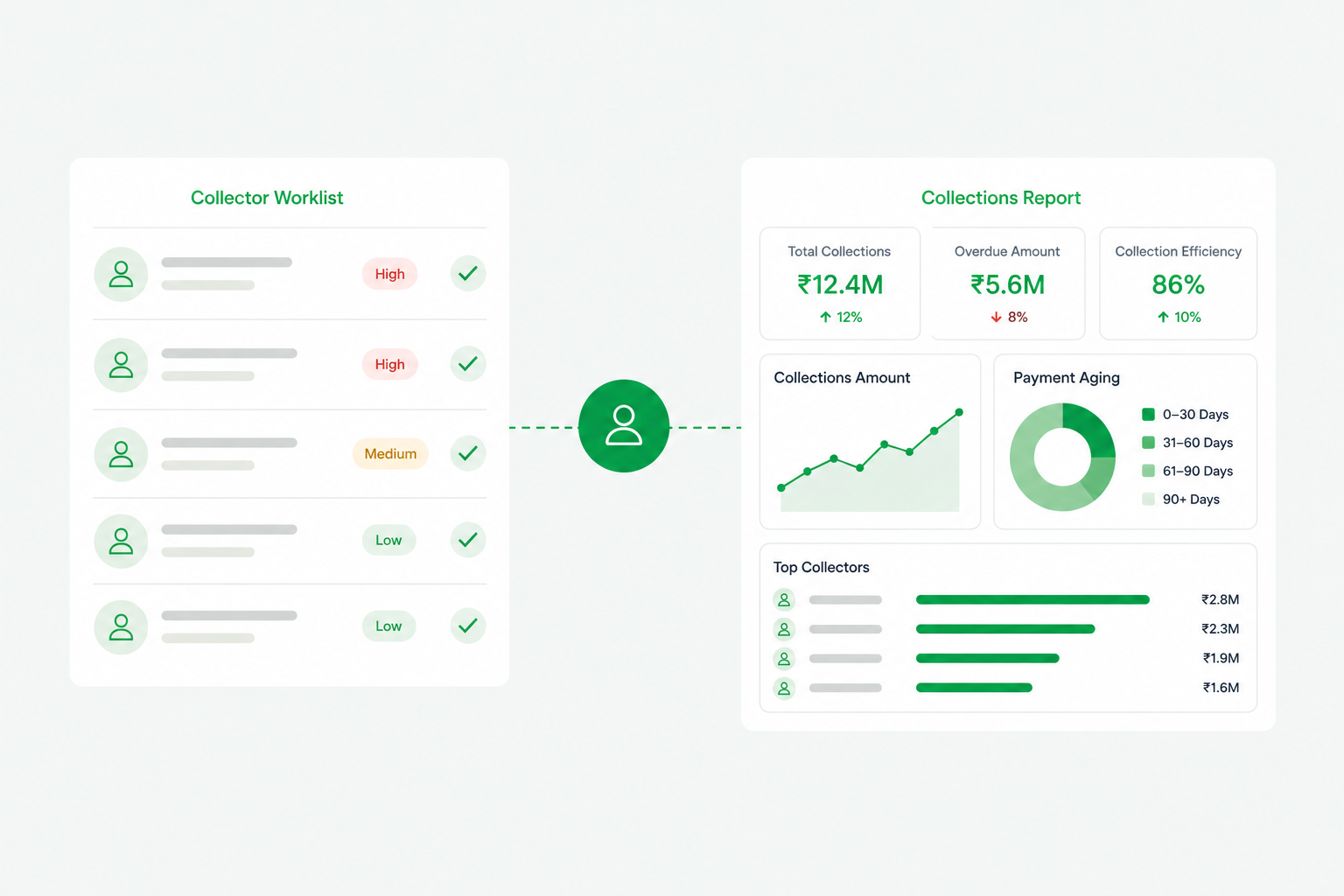
AI-Driven Collector Worklist & Collections Performance Tracking
Enable collectors with dynamic, prioritized worklists while capturing notes, comments, and call logs. Track collections performance through detailed reports and analytics across company, customer, and individual collector levels with actionable insights.
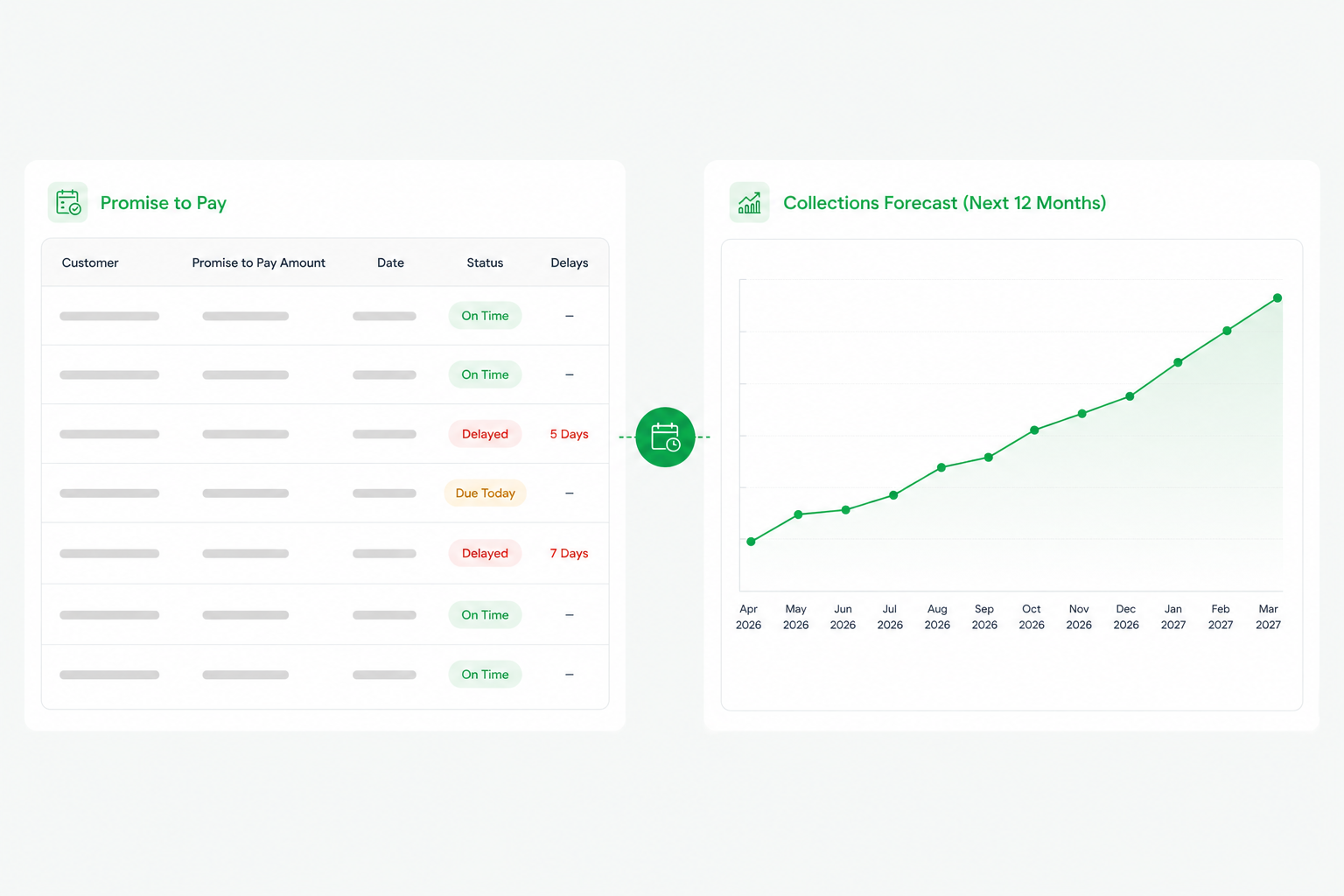
Promise-to-Pay Management & Collections Forecasting
Record and track promise-to-pay commitments with visibility into delays and variances. Generate accurate collections forecasts for cash flow predictability.
TWO AI AGENTS, ONE FINANCE BRAIN
The digital finance team behind the platform
DocSense reads all your documents like customer and partner contracts, payment advices, invoices, POs and bank statements. FlohSense reads your customer emails and either auto-reverts or takes actions. Together they close the loop from agreement to cash.
Book a DemoDocSense AI
Reads and understands customer ledgers, invoices & commercial documents
READS
- Contracts & SOWs
- Invoices
- Bank Statements
- Remittance Advice
- Customer Ledger
EXTRACTS
 Commercial Terms
- Revenue Splits
- Billing Schedules
- Customer Ledger Items
- Reconciled Payments
FlohSense AI
Reads customer & partner emails and takes action
READS
- Customer Emails
- Partner Emails
- Payment Advice
- Data Requests
AUTOMATES
- Payment Recon
- Dispute Creation
- Contact Updates
- Auto-Reverts
Frequently asked questions about FinFloh's Accounts Receivable Collections Software
AI-driven collections software helps finance teams recover outstanding receivables by automating follow-ups, prioritizing high-risk accounts, and structuring collection workflows based on real-time data.
FinFloh analyzes aging, invoice value, customer payment behavior, and risk indicators to guide collectors toward the highest-impact actions and accelerate receivables recovery.
FinFloh evaluates invoices based on overdue days, outstanding amount, historical payment trends, and risk signals.
It generates a prioritized worklist so collectors focus first on accounts with the greatest recovery potential.
This structured prioritization improves efficiency and shortens collection cycles.
An AI-driven collector’s worklist is a dynamically generated task list that ranks action items based on urgency, risk level, and potential recovery value.
FinFloh provides collectors with clear next-best actions, eliminating manual spreadsheet sorting and enabling focused execution.
FinFloh automates follow-ups through configurable dunning workflows triggered by overdue days, invoice value, customer segmentation, or risk category.
Organizations can define communication frequency, escalation paths, and message templates to ensure consistent and professional customer engagement.
Yes. FinFloh allows organizations to configure collections workflows based on customer priority, overdue duration, invoice amount, and risk profile.
Different dunning strategies and escalation rules can be applied across customer segments to balance relationship management with recovery efficiency.
FlohSense AI enhances collections by intelligently managing customer communications during dunning cycles.
It monitors outgoing reminders and reads incoming customer responses to extract key information such as promise-to-pay commitments, payment references, and dispute details.
The AI Agent parses unstructured email replies, captures payment information for downstream cash application, and routes disputes or queries to the appropriate teams.
It can also adjust follow-up workflows based on customer responses and risk signals.
By converting email interactions into structured action items, FlohSense accelerates response handling, reduces manual inbox monitoring, and ensures coordinated resolution across finance, sales, and operations teams.
Yes. Collectors can log promise-to-pay commitments, payment confirmations, and interaction notes directly within the system.
FlohSense AI can also extract promise-to-pay details from customer emails, ensuring commitments are captured accurately and tracked for follow-up.
Days Sales Outstanding (DSO) measures how long it takes to collect payments, while Collection Effectiveness Index (CEI) measures how effectively receivables are recovered.
FinFloh reduces DSO and improves CEI by prioritizing high-risk accounts, automating timely follow-ups, enforcing structured escalation workflows, and providing real-time visibility into overdue receivables.
This data-driven approach improves recovery rates and strengthens working capital performance.
FinFloh provides visibility into key collections performance indicators, including Days Sales Outstanding (DSO), Collection Effectiveness Index (CEI), aging bucket distribution, recovery rates by segment, promise-to-pay adherence, and collector productivity and activity logs.
These insights help finance leaders measure performance, identify bottlenecks, and continuously optimize collections strategy.
Manual collections often require time spent sorting spreadsheets, drafting reminders, and tracking responses.
FinFloh automates prioritization, follow-ups, and activity tracking while generating AI-driven worklists for collectors.
This allows teams to manage larger receivables portfolios without increasing headcount and improves productivity per collector.
FinFloh tracks collector activities, follow-ups, escalations, and recovery outcomes through structured logs and real-time dashboards.
Managers gain visibility into workload distribution, response effectiveness, and performance trends to improve accountability and optimize team efficiency.
Yes. FinFloh enables structured access to invoices, ledger statements, and payment details during the collections process.
Providing visibility to customers reduces back-and-forth communication, clarifies outstanding balances, and supports faster resolution of payment delays.
You can begin by scheduling a demo or discovery session with our team.
We will assess your current collections workflows, DSO trends, CEI performance, and escalation processes.
FinFloh’s onboarding approach includes configuring dunning workflows, AI-driven prioritization, internal alerts, and CRM/ERP integration.
With structured implementation and minimal IT dependency, organizations can quickly transition from manual chasing to data-driven collections execution.
Explore the Full Potential of FinFloh
Supercharge Your Receivables Performance