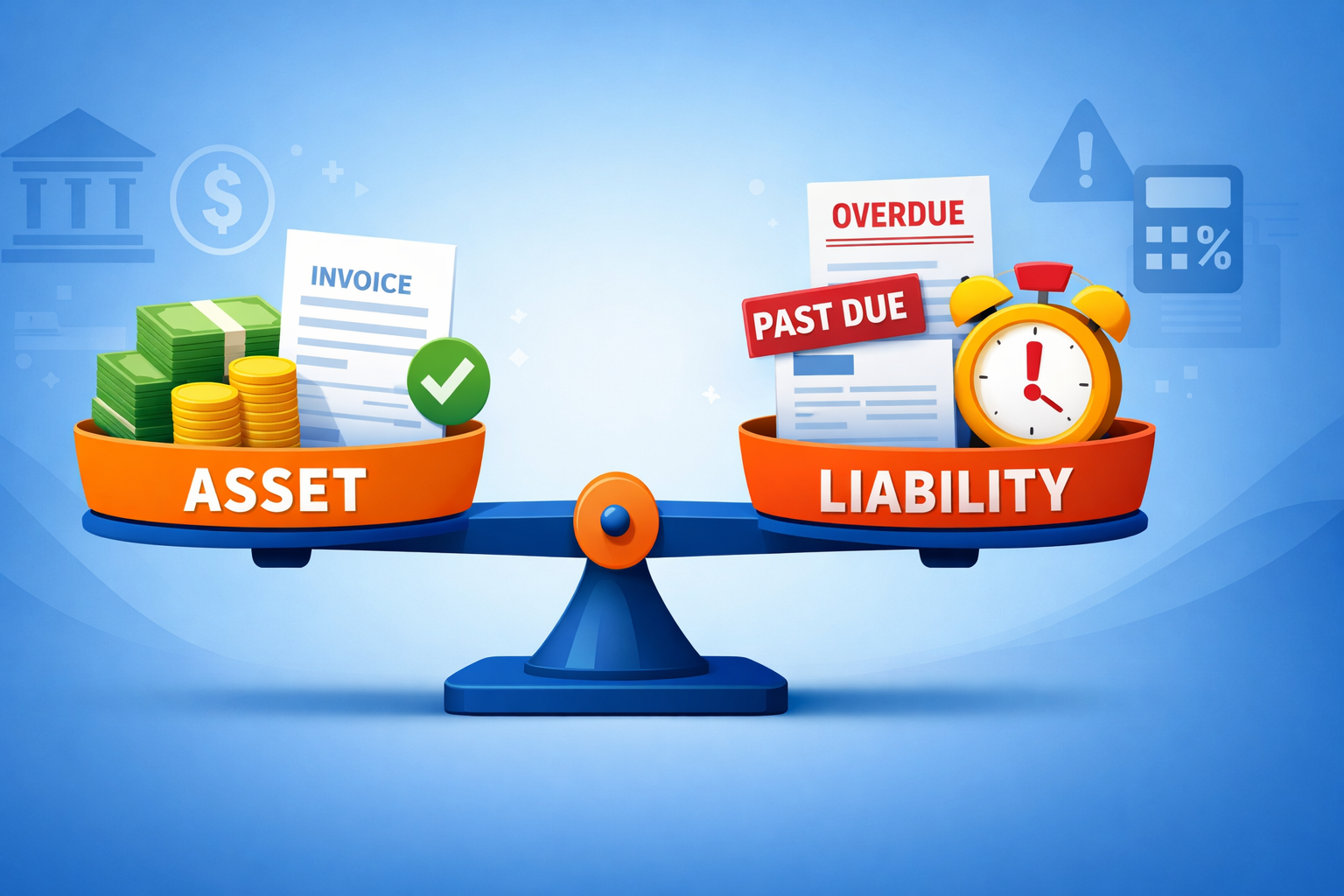

Is Accounts Receivable an Asset or Liability? This question is at the heart of managing your business’s finances well. Whether AR works for or against you depends on how you handle it. Understanding whether your AR is a financial asset or a costly liability can make all the difference to your cash flow and growth.
Accounts Receivable (AR) might seem like just another number on your balance sheet — a simple line that says “money owed to us.” But here’s the thing: AR is way more than that. It’s the heartbeat of your cash flow, the bridge between your business and your customers, and a clear reflection of how well you manage your finances.
So, is Accounts Receivable an asset or a liability? The honest answer? It depends. Let’s unpack what that means for your business.
Table of Contents
Why Accounts Receivable Can Feel Like a Problem?
Most businesses say AR is an asset — and technically, it is. But in practice, many treat it like a headache. Think about it: chasing overdue payments, dealing with confused customers, delayed cash inflows, and uncertainty about how much money is really available.
The consequences are all too real:
- Cash flow gets murky and unpredictable
2. Payments come in late, throwing off budgets
3. Customer relationships get strained because of billing hassles
When AR isn’t managed properly, what should be your business’s financial strength becomes a drain on resources and energy.

The Real Difference Between Asset and Liability in Accounts Receivable
Before diving deeper, it’s worth clarifying the basics:

The line between accounts receivable being an asset or a liability is thinner than most realize—and it all comes down to management. When your AR is collected on time and handled smoothly, it’s a powerful asset that fuels cash flow and supports your business growth.
But if invoices linger unpaid, disputes pile up, and collections become a constant headache, that same AR turns into a liability—locking up cash and weighing down your financial health. Simply put, the true nature of your accounts receivable depends on how well you manage it.
How Accounts Receivable Actually Works?
Here’s the simple flow:
- You deliver a product or service.
- You send an invoice to your customer.
- That invoice becomes part of your Accounts Receivable — money owed to you.
- When the customer pays, that AR converts into cash in your bank.
Sounds straightforward, right? But managing AR is more than just waiting for payments. It means:
- Keeping track of payment deadlines
- Following up on late invoices without hurting relationships
- Resolving disputes quickly
- Forecasting your cash flow accurately
If you’re still juggling spreadsheets, emails, and manual reminders, you’re working way harder than you need to. This is where automation steps in — making AR management faster, clearer, and less painful.
Why Treating Accounts Receivable as a Real Asset Changes Everything?
Here’s why businesses that treat their AR as a strategic asset win big:
1. You Get Clear Cash Flow Insights
No more guesswork. Automated AR tools give you real-time updates on who’s paid, who’s late, and what cash is coming in. That means smarter decisions, faster.
2. Your Customers Have a Better Experience
Confusing invoices and endless follow-ups frustrate customers. With automated payment portals and transparent processes, customers see what they owe and pay easily — which means fewer disputes and faster payments.
3. You Cut Down Collection Costs
Manual chasing is expensive and tedious. Automation reduces the grunt work — sending reminders, reconciling payments, and even letting customers pay themselves — freeing your team for higher-value work.
4. Disputes Get Resolved Faster
Disputes are inevitable, but with everything tracked in one place, your team can handle them quickly and fairly, keeping customers happy and cash flowing.
5. You Strengthen Your Working Capital
Faster AR collections mean more cash on hand. That means you can invest in growth, pay your bills on time, and keep your business running smoothly.
Conclusion

Accounts Receivable is an asset — but only if you treat it like one. If you ignore it or rely on clunky manual processes, it quickly becomes a liability that drains your cash and stresses your team.
The right tools and processes make all the difference. Automating AR gives you faster payments, clearer cash flow, and happier customers. It’s a smart move to future-proof your business.
And with FinFloh’s cutting-edge AR automation, you’re not just managing receivables — you’re unlocking their full potential.
About FinFloh : Transforming Accounts Receivable
FinFloh doesn’t just manage your accounts receivable — it transforms them. Poorly handled AR locks up cash and creates bottlenecks that slow your entire business down.
FinFloh’s automated platform simplifies invoice management, speeds up collections, and cuts down disputes — turning AR from a potential liability into a powerful business asset. With real-time visibility and smooth customer interactions, FinFloh helps your AR work for you — improving cash flow, boosting growth, and building customer trust.
Ready to see how FinFloh can turn your AR into a growth engine? Talk to our experts today and get started now.
