
Managing cash flow is one of the biggest priorities for businesses. Even profitable companies can face liquidity challenges when customer payments are delayed, invoices remain outstanding, or operational expenses arise before revenue is collected.
This is where payment advances become important. Payment advances help businesses access funds earlier, improving working capital and ensuring smoother operations.
Table of Contents
What Is a Payment Advance?
A payment advance is an arrangement where a business receives funds before the actual payment due date or before completing a transaction cycle.
Instead of waiting for customer payments, project completion, or invoice maturity, businesses gain early access to cash through an advance provided by a customer, lender, financial institution, or financing partner.
Payment advances are commonly used to:
- Improve cash flow
- Fund operations
- Manage working capital gaps
- Reduce liquidity pressure
- Support business growth
How Payment Advances Work
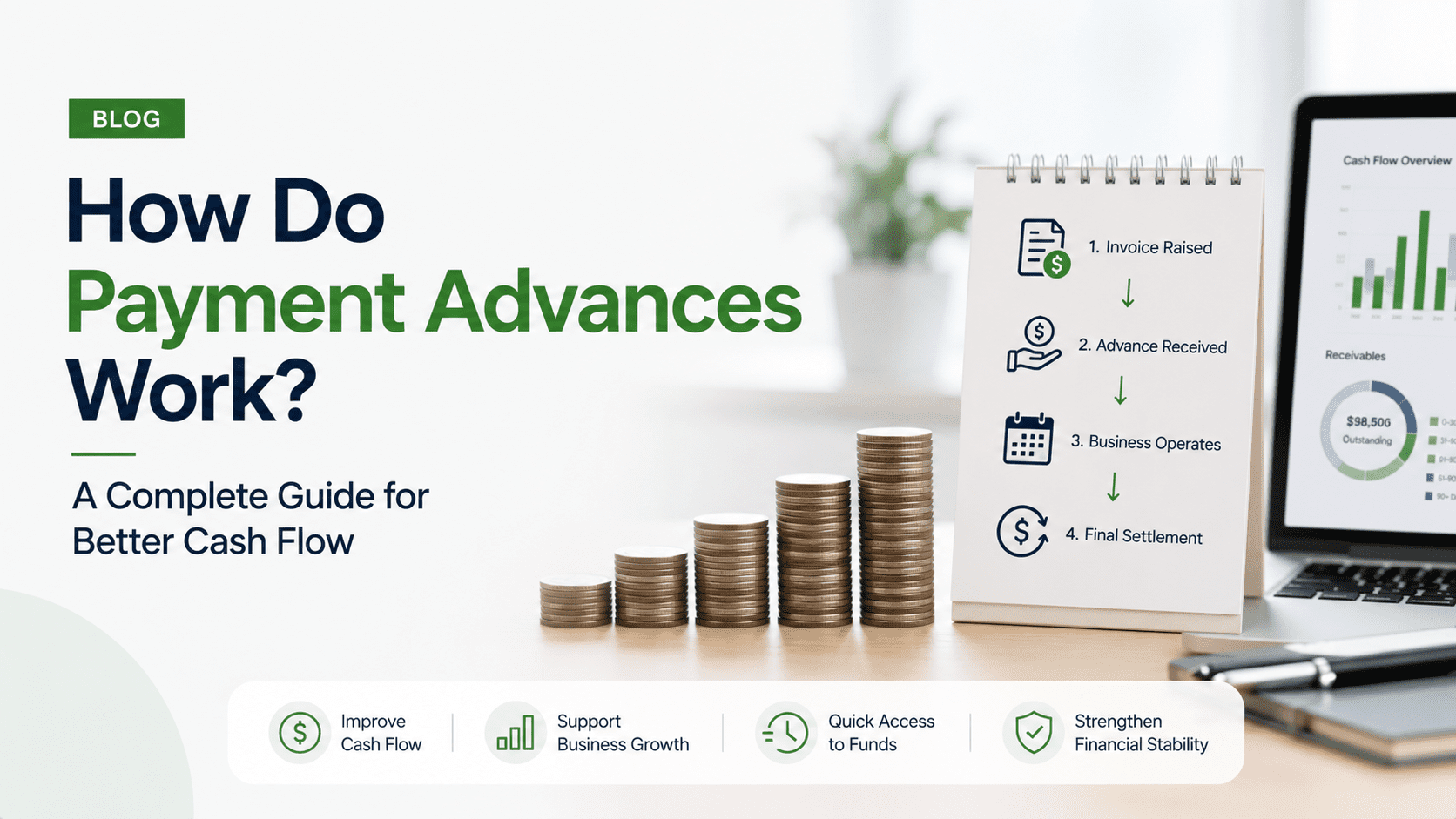
The process typically involves four stages:
1. A Transaction or Obligation Exists
The business has:
- An invoice
- A purchase order
- A contract
- A future receivable
- A project milestone
This creates an expected future payment.
2. An Advance Is Requested or Approved
A customer, bank, financing provider, or platform agrees to release part of the payment early.
The advance may be:
- A percentage of the invoice value
- A fixed amount
- Linked to project milestones
- Based on receivables value
3. Funds Are Released Early
The business receives cash before the standard payment cycle is completed.
This helps cover:
- Payroll
- Inventory purchases
- Supplier payments
- Operational expenses
- Expansion needs
4. Final Settlement Happens Later
Once the actual payment is completed:
- The advance amount is adjusted
- Remaining balances are settled
- Fees or financing charges may apply

Types of Payment Advances
Customer Advance Payments
Customers pay partially or fully before goods or services are delivered.
Common in:
- Manufacturing
- Construction
- Custom orders
- Subscription businesses
Invoice Financing Advances
Businesses receive advances against unpaid invoices from financing providers.
The lender typically advances a percentage of the invoice amount upfront.
Merchant Cash Advances
Businesses receive funds upfront in exchange for a portion of future sales or card receivables.
Often used in retail and hospitality sectors.
Salary or Payroll Advances
Employers provide employees with a portion of salary before payday.
Project or Milestone Advances
Payments are released at predefined stages of a project instead of waiting until completion.
Why Businesses Use Payment Advances
Improve Cash Flow
Payment advances help businesses maintain liquidity even when receivables are delayed.
Reduce Working Capital Pressure
Businesses can continue operations without waiting for long payment cycles.
Support Growth
Access to early cash enables investments in inventory, hiring, and expansion.
Handle Seasonal Demand
Companies can manage fluctuations in revenue and operational costs more effectively.
Reduce Dependency on Traditional Loans
Advances may provide quicker access to funds compared to conventional financing.
Applications of Payment Advances in Accounts Receivable
Payment advances are closely linked to accounts receivable management.
Faster Access to Receivables
Businesses can unlock working capital tied up in unpaid invoices.
Improved Collections Stability
Early funding reduces dependency on customer payment timing.
Better Cash Forecasting
Finance teams gain greater predictability in short-term cash flow planning.
Reduced Operational Disruptions
Businesses can maintain supplier and employee payments even during collection delays.
Risks and Challenges of Payment Advances
While payment advances improve liquidity, they also come with considerations.
Financing Costs
Some advances involve interest rates, processing fees, or discounts.
Dependency Risks
Over-reliance on advances may create long-term cash flow dependency.
Customer Credit Risk
Invoice-based advances depend on customer payment reliability.
Reconciliation Complexity
Tracking advances, deductions, and final settlements can increase accounting complexity.
Best Practices for Managing Payment Advances
Evaluate Cash Flow Needs Carefully
Use advances strategically rather than as a permanent substitute for collections efficiency.
Monitor Customer Credit Quality
Assess payment behavior before using receivables for financing.
Maintain Accurate AR Records
Clear invoice tracking and reconciliation reduce settlement issues.
Use Automation for Visibility
Real-time AR visibility helps finance teams track advances, payments, and outstanding balances effectively.
How FinFloh Supports Payment Advance Visibility
FinFloh helps finance teams improve receivables visibility and cash flow management through automated AR workflows.
Real-Time Receivables Tracking
Finance teams gain visibility into invoices, aging, and expected collections.
Automated Reconciliation
Payment and invoice matching reduce manual effort and improve accuracy.
Faster Dispute Resolution
Structured workflows help resolve issues that delay payments and impact liquidity.
Improved Cash Flow Insights
Unified AR visibility enables better forecasting and working capital planning.
To implement payment advances, you can check out FinFloh A/R product page. You can also Book a Demo to see how it works.
Payment Advances vs Traditional Loans
| Payment Advances | Traditional Loans |
|---|---|
| Linked to receivables or transactions | Based on broader credit evaluation |
| Faster approval cycles | Longer approval processes |
| Short-term liquidity focus | Longer-term financing |
| Often operationally driven | Typically debt-driven |
Conclusion
Payment advances help businesses improve liquidity by unlocking access to funds earlier in the payment cycle. Whether through customer advances, invoice financing, or milestone-based payments, they play an important role in working capital management.
However, effective management of payment advances requires strong visibility into receivables, accurate reconciliation, and disciplined cash flow planning.
As businesses modernize finance operations, combining payment advance strategies with automated AR processes enables greater control, predictability, and financial agility.
