
Digital payments have become the backbone of modern business. But as online transactions grow, so do concerns around fraud, data breaches, and payment security. That’s where Payment Tokenization comes in.
From ecommerce brands to SaaS companies and B2B finance teams, businesses today rely on payment tokenization to protect sensitive payment information while creating smoother customer experiences.
In simple terms, payment tokenization replaces sensitive card or banking information with a secure, unreadable token. Even if attackers intercept the data, it becomes useless without the original mapping system.
For businesses managing high transaction volumes, recurring payments, or automated collections, payment tokenization has become essential for reducing risk and improving trust.
Table of Contents
What Is Payment Tokenization?
Payment tokenization is a security process that replaces sensitive payment data — such as credit card numbers or bank account details — with a randomly generated token.
The token acts like a substitute value. It has no meaningful financial information on its own and cannot be reverse-engineered by hackers.
Instead of storing actual card details, businesses store tokens, significantly reducing exposure to payment fraud and compliance risks.
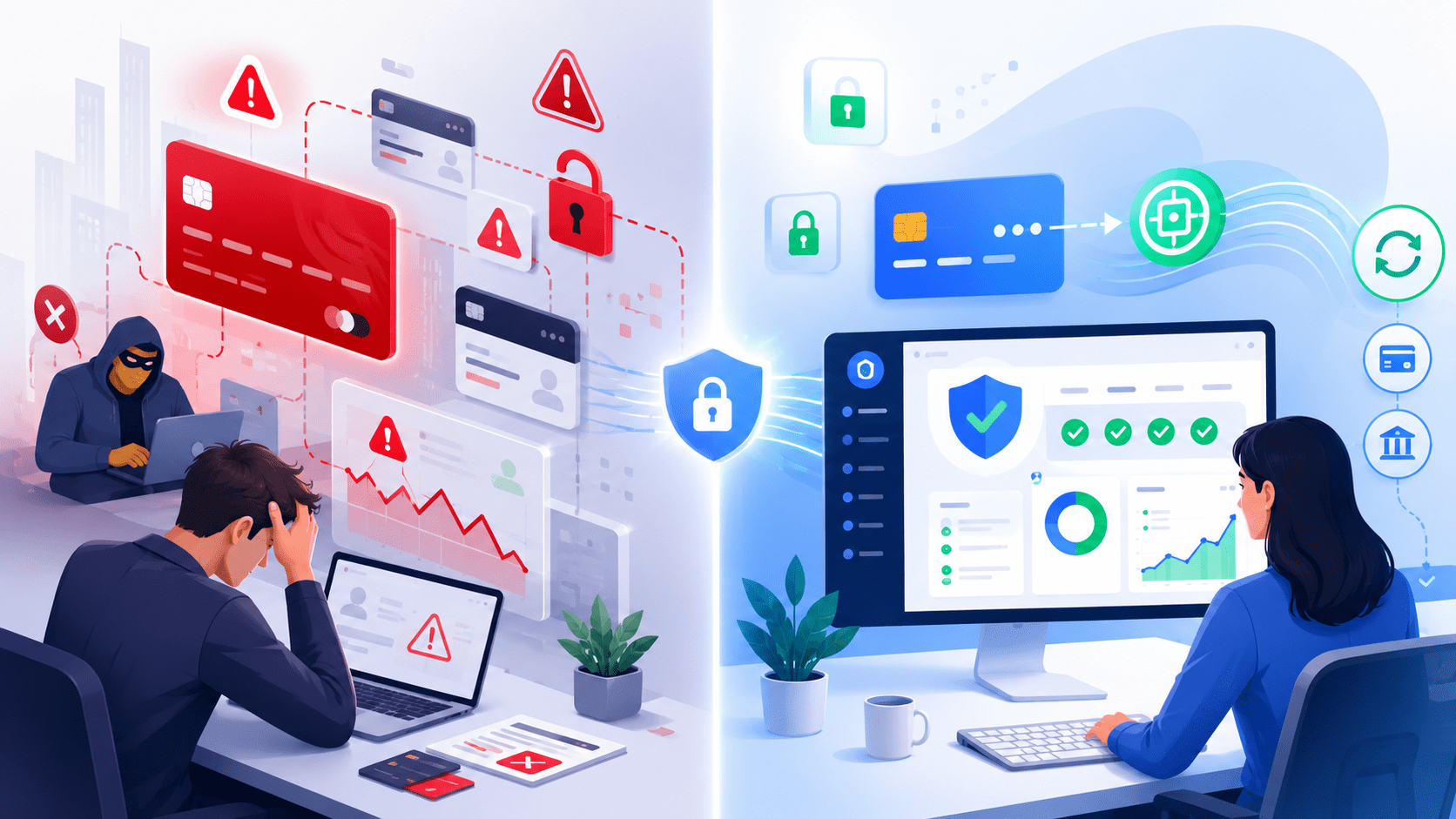
Example of Payment Tokenization
Without tokenization:
- Customer enters card number
- Merchant stores card information
- Sensitive data becomes vulnerable during storage or transmission
With tokenization:
- Customer enters card number
- Payment gateway converts it into a token
- Merchant stores only the token
- Actual payment data remains securely stored elsewhere
This means businesses can process payments without directly handling sensitive financial information.

How Does It Work?
The payment tokenization process happens almost instantly in the background.
Step 1: Customer Enters Payment Information
A customer enters their payment details during checkout or invoice payment.
Step 2: Payment Processor Creates a Token
The payment gateway or processor sends the sensitive data to a secure token vault and replaces it with a randomly generated token.
Step 3: Merchant Stores the Token
The business stores only the token instead of the original card or bank details.
Step 4: Future Payments Use the Token
For recurring billing, subscriptions, or saved payment methods, the token is used to process future transactions securely.
The actual payment data remains protected inside the payment provider’s secure environment.
Why Payment Tokenization Matters for Businesses?
Payment security is no longer optional.
Customers expect businesses to protect financial information, and regulators continue tightening compliance requirements.
Payment tokenization helps businesses:
- Reduce fraud exposure
- Lower the risk of data breaches
- Improve customer trust
- Simplify PCI compliance requirements
- Enable safer recurring payments
- Secure stored payment methods
For finance and accounts receivable teams, tokenization also supports smoother automated payment collection workflows.
Payment Tokenization vs Encryption
Many people confuse tokenization with encryption, but they work differently.
Encryption
Encryption converts data into unreadable text using mathematical algorithms. The encrypted data can still be decrypted using the correct key.
Tokenization
Tokenization replaces the original data completely with a meaningless token. The actual data is stored separately in a secure vault.
The Key Difference
If encrypted data and its decryption key are compromised, attackers may recover the original information.
With tokenization, the token itself has no exploitable value.
That’s why many modern payment systems use both encryption and tokenization together for stronger protection.
Common Types of Payment Tokenization
Different payment systems use tokenization in different ways.
1. Network Tokenization
Card networks generate tokens tied directly to a payment card.
This is commonly used in:
- Mobile wallets
- One-click checkout
- Subscription billing
2. Gateway Tokenization
Payment gateways create and manage tokens for merchants.
Businesses use this to securely store customer payment methods without handling raw card data.
3. Device Tokenization
Used in mobile payment apps where tokens are tied to a specific device.
Even if someone steals the token, it may not work elsewhere.
Industries That Benefit Most from Payment Tokenization
Payment tokenization is valuable across nearly every industry that processes digital payments.
1. Ecommerce
Protects customer payment information during online purchases.
2. SaaS and Subscription Businesses
Enables secure recurring billing and auto-pay workflows.
3. Healthcare
Helps safeguard sensitive payment and patient-related financial information.
4. B2B Finance and Accounts Receivable
Supports secure invoice payments, customer portals, and automated collections.
Businesses handling large invoice volumes especially benefit from reducing payment risks while improving customer payment experiences.
How Payment Tokenization Helps Accounts Receivable Teams
For AR teams, payment tokenization goes beyond security.
It also improves operational efficiency.
1. Faster Recurring Payments
Stored tokens simplify repeat transactions and reduce payment friction.
2. Better Customer Experience
Customers can securely save payment methods without worrying about exposing sensitive information.
3. Reduced Failed Payments
Tokenized payment methods can support automatic updates when cards expire or are replaced.
4. Lower Fraud Risk
Finance teams reduce the risk associated with storing customer payment information internally.
Combined with automated collections and payment workflows, tokenization can significantly improve cash flow predictability.
Is Payment Tokenization PCI Compliant?
Payment tokenization can help reduce PCI DSS compliance scope because businesses no longer store raw cardholder data directly.
However, tokenization alone does not automatically guarantee PCI compliance.
Businesses still need to:
- Work with compliant payment providers
- Follow secure payment handling practices
- Maintain strong access controls
- Monitor payment systems regularly
Tokenization simply reduces the amount of sensitive data businesses are responsible for protecting.
Challenges of Payment Tokenization
While payment tokenization offers strong benefits, implementation can still come with challenges.
1. Integration Complexity
Older payment systems may require updates or API integrations.
2. Vendor Dependence
Businesses rely heavily on payment providers managing the token vault securely.
3. Cross-Platform Compatibility
Tokens created by one provider may not always work across multiple systems.
Despite these challenges, the long-term security and operational benefits usually outweigh the implementation effort.
The Future of Payment Tokenization
As digital payments continue evolving, payment tokenization is becoming standard practice across industries.
The rise of:
- Embedded finance
- Digital wallets
- Subscription models
- Real-time payments
- AI-driven fraud detection
…is making secure tokenized payment infrastructure even more important.
Businesses that invest early in secure payment systems will be better positioned to scale customer trust and financial operations.
Conclusion
Payment tokenization has become one of the most important technologies powering secure digital transactions today.
By replacing sensitive financial data with secure tokens, businesses can reduce fraud risks, improve compliance, and create smoother payment experiences for customers.
For finance teams, especially those managing accounts receivable and recurring payments, tokenization also supports more efficient and secure collections workflows.
As payment ecosystems become increasingly digital, businesses that prioritize payment security will build stronger customer trust and long-term operational resilience.
About FinFloh
FinFloh is an AI-powered accounts receivable automation platform designed to help businesses streamline collections, improve cash flow visibility, and enhance customer payment experiences.
From automated reminders and collections workflows to payment reconciliation and predictive analytics, FinFloh enables finance teams to reduce manual effort while accelerating cash inflows securely and efficiently.
Want to improve payment security while accelerating collections?
Discover how automated accounts receivable workflows, secure payment experiences, and intelligent collections strategies can help your business scale faster.
Book a demo to see how FinFloh helps finance teams modernize collections, automate workflows, and improve cash flow visibility.
